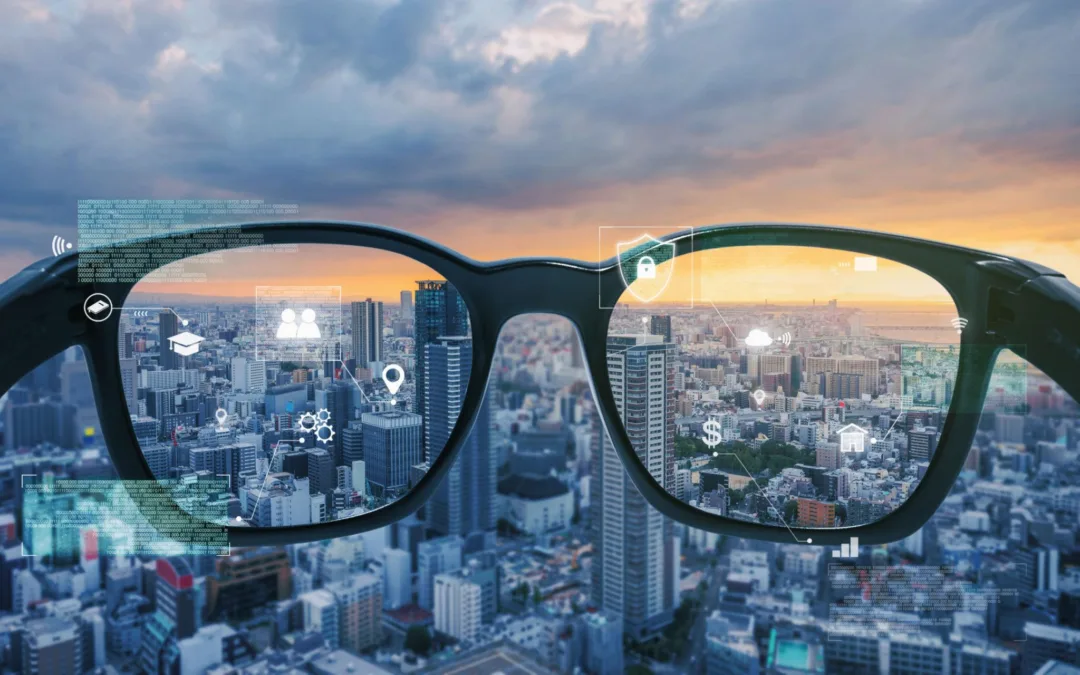
For more than a decade, technology companies have dreamed of replacing smartphones with smart glasses. Most attempts failed to gain traction, but Samsung and Google believe the market is finally ready for a breakthrough.
The two companies recently showcased their vision for Android XR, a new platform designed specifically for extended reality devices. Unlike previous generations of smart glasses, the new products focus heavily on artificial intelligence, natural interaction, and everyday practicality.
One of the biggest challenges facing earlier smart glasses was their appearance. Consumers were reluctant to wear bulky devices in public, and concerns about privacy further limited adoption. Samsung and Google are attempting to solve both problems by creating glasses that look and feel much closer to traditional eyewear.
Artificial intelligence plays a central role in the Android XR strategy. Instead of requiring users to navigate complex menus or apps, the glasses can understand natural language commands and provide information when needed. Features such as live translation, navigation, contextual recommendations, and visual search could become standard experiences.
Google’s Gemini AI is expected to serve as the primary intelligence layer behind the platform. This means users may eventually be able to ask questions about their surroundings, receive travel recommendations, summarize information, or even perform productivity tasks directly through the glasses.
Industry analysts believe the combination of AI and wearable hardware could create a new category of devices that complements smartphones rather than replacing them immediately. Similar to the way smartwatches evolved alongside phones, smart glasses could become an additional computing layer available throughout the day.
Competition in this space is also heating up. Meta continues to invest heavily in AI-powered eyewear, while Apple is exploring its own extended reality initiatives. Samsung and Google hope their combined ecosystem strength will give Android XR a significant advantage.
Whether consumers are finally ready to embrace smart glasses remains to be seen. However, with advances in AI, battery efficiency, and hardware design, the industry may be closer than ever to making wearable computing a mainstream reality.