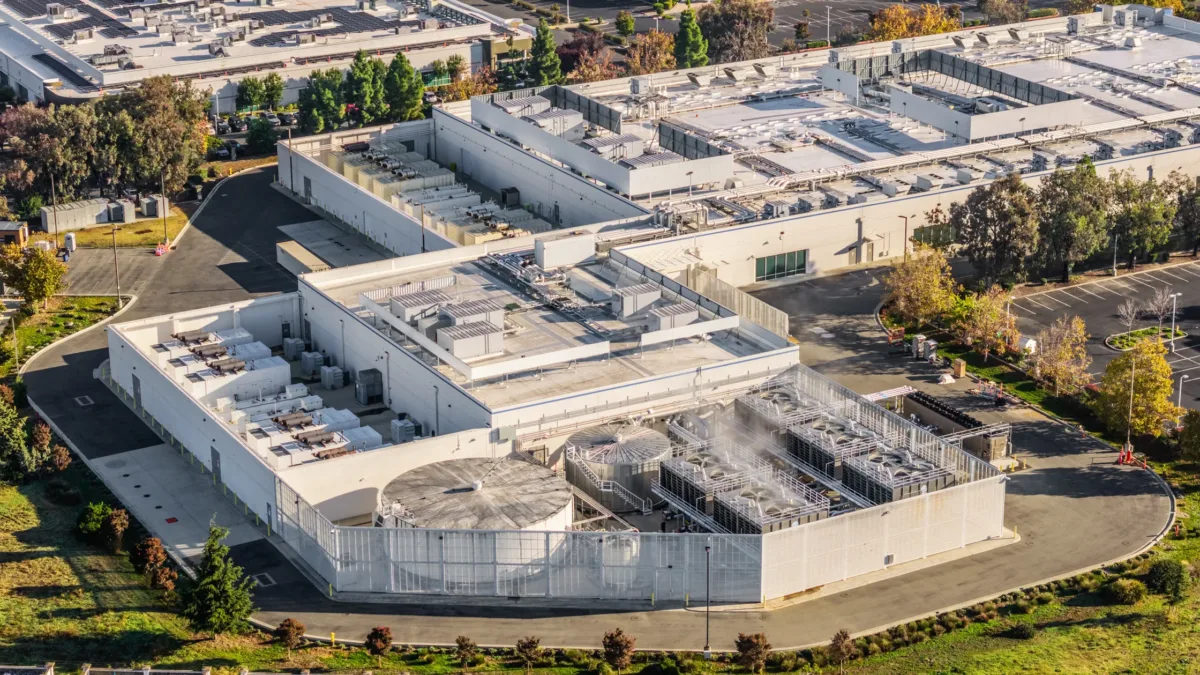
Data centers are burning through fresh water at a frightening pace. Nobody’s really keeping count.
Here’s something most people don’t think about when they ask ChatGPT a question or run a search on Google: somewhere, a massive facility full of servers is pulling millions of gallons of water out of the ground to keep those chips from melting.
In 2023, Google’s data center in Council Bluffs, Iowa alone withdrew approximately 1.4 billion gallons of water from the municipal supply. That’s one building. One year. One city’s water system quietly getting drained so you can search for pasta recipes.
The numbers are genuinely alarming
U.S. data centers collectively consumed around 17 billion gallons of water for cooling in 2023 — and that figure could double or quadruple by 2028 as AI workloads push computational demands even higher. The more powerful the AI model, the more heat it generates. The more heat, the more water needed to cool it down. It’s a straightforward equation with an uncomfortable answer.
About 80% of the water withdrawn by data centers simply evaporates — gone, not returned. The rest gets discharged as warm wastewater, which can overwhelm local treatment facilities. And that’s just the on-site footprint. Factor in the water burned by power plants supplying electricity to these facilities, and the indirect water use from electricity alone was estimated at 211 billion gallons in 2023.
Nobody actually knows how much water is being used
That’s not hyperbole. A patchwork of state, federal, and local policies allows data center operators to avoid publicly disclosing their actual water use. California tried to fix this last year with a bill requiring operators to report their water consumption. Governor Gavin Newsom vetoed it, saying he was reluctant to impose reporting requirements on the sector without understanding the full impact on businesses.
So the industry keeps growing, the water keeps flowing, and the public keeps getting told to take shorter showers.
Tech giants are starting to feel the pressure
To be fair, the big players aren’t completely ignoring the problem. Microsoft reports an 80% cumulative improvement in water use efficiency across successive generations of data center design, and announced a next-generation closed-loop, chip-level cooling architecture in 2024 that virtually eliminates evaporative water loss — with pilot deployments expected this year. The company has also pledged to go “water positive” by 2030, meaning it wants to put back more water than it takes.
Google has expanded its use of recycled and non-potable water for cooling, now using reclaimed water at facilities in Singapore, Georgia, and elsewhere — roughly 22% of its total data center cooling volume in 2023.
Progress, sure. But the AI buildout is happening faster than the solutions are being deployed, and the communities sitting next to these facilities — many of them already in drought-stressed regions — aren’t seeing a lot of benefit from the promises.
The next time your AI gives you an instant answer, it’s worth remembering that somewhere, a water table just got a little lower.