For a company that built its entire brand on doing everything itself, this is quite a sentence to say out loud.
In a briefing after WWDC 2026, Apple confirmed that its new Apple Foundation Models were developed using Google Gemini technology and run in cloud infrastructure powered by NVIDIA GPUs. The company that spent decades telling the world it makes the hardware, the software, and the silicon — all in-house, all integrated, all Apple — is now openly leaning on its two biggest rivals to power its AI ambitions.
What Apple actually built vs. what it borrowed
Apple is careful to draw a distinction here, and it matters. Craig Federighi clarified that Apple Intelligence doesn’t use Google’s Gemini models directly. Instead, Gemini technology was used during the training process — the new Apple Foundation Models were trained on Apple’s own data alongside outputs from Gemini’s flagship models. Think of it less as “Apple is running Gemini on your iPhone” and more as “Apple used Gemini as a teacher to make its own models smarter.”
The cloud side is a different story. Apple VP of AI Amar Subramany said the Apple Foundation Model Cloud Pro is comparable in capability to Google’s flagship Gemini models — and it runs on NVIDIA GPUs inside Google Cloud infrastructure, with additional privacy protections layered on top.
The privacy angle Apple is betting on
This is where Apple is trying to differentiate rather than just compete. Apple says it required NVIDIA to implement additional privacy features specifically so that even infrastructure providers cannot access user data — not Apple, not Google, not NVIDIA itself. The routing system decides whether your request gets processed on-device or sent to Private Cloud Compute based on the complexity of the task and whether personal data is involved.
Whether that privacy architecture actually holds up under scrutiny is a question security researchers will spend the next few months trying to answer. But the intent is clear: Apple wants to be the company that delivers cloud AI without the surveillance business model attached to it.
Why this matters beyond the tech press
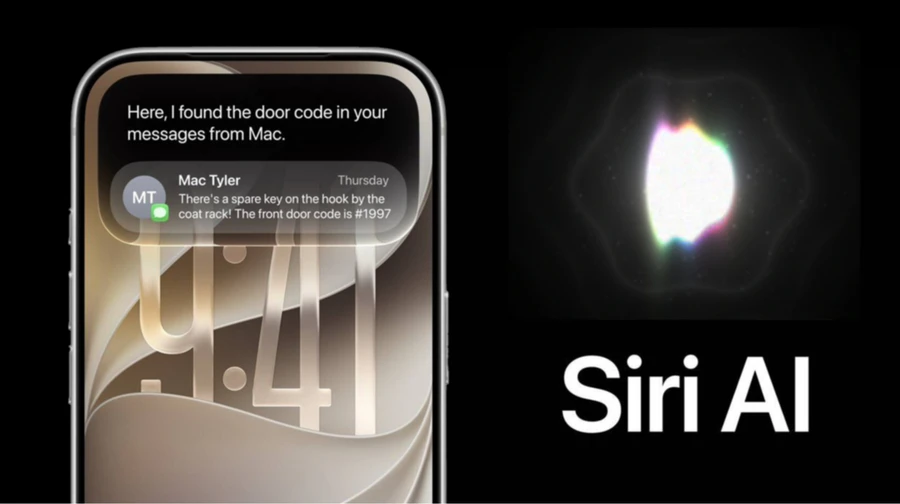
Apple uses a request routing system that determines automatically — based on task complexity and whether personal data is involved — whether to process locally on-device or via the cloud infrastructure. Most users will never think about this distinction. They’ll just notice that Siri finally works.
That’s the real story here. Apple spent two years overpromising on AI features that didn’t ship, settled a $250 million lawsuit over it, and is now at WWDC doing something unusual for Apple: admitting it needed help. From Google. On NVIDIA hardware. In a Google data center.
The closed ecosystem just cracked open a little — quietly, with a privacy press release attached, but it cracked. The company that once told you its chips, its software, and its silicon were one seamless whole is now explaining why it also needed Gemini and H100s to make Siri not embarrassing. It got there eventually. The how is just more complicated than the marketing suggested.